
A New Arrow in the Pro-vaccine Quiver: Eula Biss's On Immunity

I'm often accused of not seeing the other side of the vaccine "debate". I think that's a fair description of me, but it's for a good reason--there is no other side. However, it is understandable that a lay person inundated with multiple layers of misinformation may be honestly mistaken and fall prey to the anti-vaccine movement. Once in the clutches of the movement, it can be hard to reach such people. For example, the standard vaccine books often do not make any headway against what is, for many, a largely emotional conclusion against the power of vaccines. As such, many physicians feel resigned to accept that some people are unable to be swayed. However, there is a new tool available.

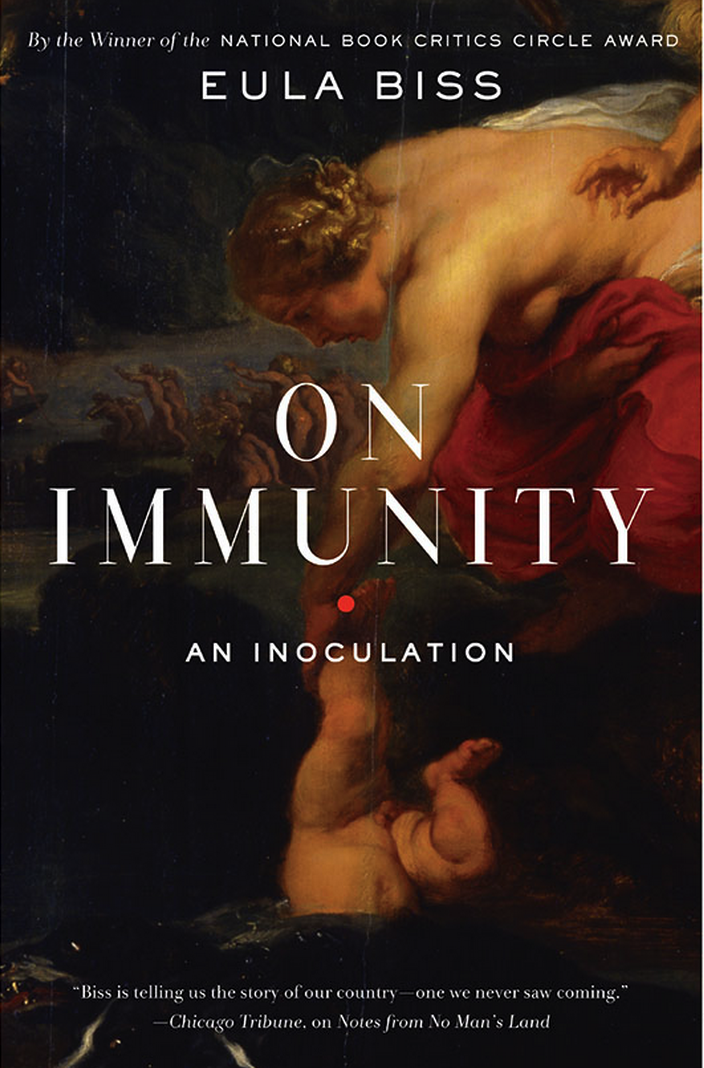
Eula Biss's On Immunity: An Inoculation is a remarkable book that I believe will fill an important niche in the defense of vaccines and has the potential of persuading those who doubt the benefit of vaccines to re-examine their conclusions. The book is a journey through the honest deliberations Ms. Biss herself undertook with the birth of her son. Rightly concerned with her newborn's safety and protecting him from harm (like the mother of Achilles--see the cover art), Ms. Biss's diligence to unpack arguments for and against vaccines is instructive as it shows how an active mind approaches complex issues and weighs the testimony and work of experts--an important trait that extends beyond vaccines.

 The comparative advantage and immense value of Ms. Biss's book is that it offers the reader a glimpse of how a non-medical individual approaches the issue of vaccination, what context of knowledge is activated, and how risk is assessed. In all of these realms, Ms. Biss excels and provides ample data (as well as expertly chosen anecdotes) to concretize the important points she makes throughout. 

Doing battle with those who would return us to the primitive with their opposition to vaccines--an unmitigated triumph of technology--will be a little easier with Ms. Biss at our side. I highly recommend her book.


Squirrels Packing Real Viral Heat, Not Just Nuts

Virtually no one thinks of squirrels as anything more than cute spastic creatures that are fun to watch. All animals harbor dangerous infectious disease that--in specific contexts--can pose a risk to humans. Accordingly, it has been well-established that squirrels are connected, via their lice, mites, and fleas, with plague, certain forms of typhus, and rickettsialpox (for example). 

A newly discovered virus (likely directly transmitted from squirrels) can now be added to these indirectly transmitted infections: variegated squirrel 1 bornavirus (VSBV-1).

What is interesting about this newly discovered fatal encephalitis-causing virus is that it appeared in 3 German squirrel breeders and how it was identified. 

Anyone who operates at the interface of humans and animals should be considered a sentinel or a canary in the coal mine for novel infections. Most human infections originated from animals and jumped into the human species at some point, so it is likely that animals will remain a major source of new infections. Such a fact underscores how important it is to be extremely vigilant when dealing with an unexplained illness in individuals who have unusual animal exposures and never being satisfied until an actual etiology has been established--something that happens all to rarely.

Additionally, the identification of this virus employed a metagenomic approach in which sequencing of nucleic acid was performed directly on squirrel samples with the aim of finding genetic material that could be linked a known microbe family. 

The paper is, to me, significant not just for the description of VSBV-1 but for highlighting the importance of viral discovery and the principles that should be applied. 

Thank You Louis Pasteur

Yesterday was the 130th anniversary of Louis Pasteur's rabies vaccination of Joseph Meister--a day that everyone should recognize and celebrate. Though Jenner's smallpox was the first vaccine and Pasteur's called his rabies version "vaccine" to honor Jenner, Pasteur--in my view--is on the highest echelon of our race. 

Why I elevate Pasteur to that level has to do with the fact that not only did he discover the rabies vaccine but his contributions to the germ theory of disease (I'm not even counting  his contributions to stereochemistry) gave the entire field a green light to hypothesize, innovate, and advance. Such an achievement's ramifications are incalculable. 

To put it simply, I just would like to say thank you to Louis Pasteur for his recalcitrant, intransigent pursuit of the truth and that I am embarrassed that some members of our species have returned to the primitive status that humans have wallowed in for most of our history by shunning vaccination and pasteurization. 

The debt we owe Pasteur is not something repayable. 

Measles Still Has A License to Kill

The news of the 1st acute measles death in the US in over a decade is an event that should serve to remind those who doubt the ability of this virus, which kills 145,000 people per year, to inflict damage in the developed world. However, I doubt it because if people can blow off the 20% hospitalization rate that occurred during the Disneyland outbreak, one immunosuppressed person's death isn't enough to crack through layers of evasion.

I am interested to learn the details of this unfortunate case that resulted in a fatal measles pneumonia to see how the diagnosis was made, when it was made, and what confounding variables were present (I know no rash was present, something that occurs in the immunocompromised).

To date there have been 178 cases of measles reported this year, with nearly half of the 50 states being affected. The numbers are largely driven by the Disneyland outbreak that began last year.

Letting our guard down against this plague carries dire consequences.


Infectious Disease: The Coolest Specialty in the World

As I always preach, infectious diseases can be an exhilarating field full of all kinds of challenges that may be lurking in each patient on whom you're consulted. Mixed amongst the mundane cases of infected pressure ulcers, cellulitis, and urinary tract infections is where you find the zebras--if you look hard enough or, in Pasteur's immortal words, have a prepared mind.

The latest zebra spotting occurred this week. The patient was an injection drug user who presented with an alteration in consciousness and ultimately was diagnosed with an encephalitis of unknown cause. Encephalitis has a variety of causes, many of which are infectious. Herpes and West Nile Virus are two common causes in the US, but many other viral causes go unidentified because of lack of easy diagnostics. Not all encephalitis, however, is infectious in origin and there are autoimmune forms as well. Treatment is different for infectious vs. autoimmune encephalitis with immunosuppression being the mainstay of management of autoimmune forms.

This patient's diagnostic workup was completely unrevealing--no virus was found and suspicion turned to an autoimmune form of encephalitis. Brain biopsy results were forthcoming when the patient's clinical course took a terminal course and the patient unfortunately died. 

Now here come's the twist.

Since this was a young patient there was a major impetus for organ donation. However, it is a very dangerous proposition to transplant organs from a person who has died of an unknown encephalitis as both rabies and West Nile have been transmitted that way. His organs were deemed not suitable for donation.

Another twist then occurred when the brain biopsy results returned.

Mucormycosis.

Many people outside of infectious disease may never have heard of Mucormycosis but it is an aggressive fungal infection that leaves most of its victims dead. It is often seen in the immunosuppressed or diabetics and occasionally has been seen in injection drug users (I saw a fatal case previously with horrible skin lesions) and was interestingly seen in Joplin tornado victims.

To transplant organs from someone who died of an invasive fungal infection, which Mucormycosis is par excellence, would be a death sentence for organ recipients. What likely occurred in this case is that heroin contaminated with fungal spores from the environment were injected and the process begun. 

So hoofbeats can belong to zebras sometimes.