
The Political Virus-A Review of AIDS: Between Science and Politics by Peter Piot

Snip20160329_9.png

Infectious disease is, for better or worse, intertwined with politics in a manner no other form of medicine is. While certain infectious disease require core governmental functions such as quarantine to be exercised and bioweapons involve multiple aspects of government role in promoting national security, it goes beyond that -- as a daily perusal of the headlines in our post-Ebola world reveals. Of the infectious diseases, HIV is in a realm all of its own really marking a new phase in how politics and infectious disease interact. While tuberculosis, plague, cholera, yellow fever, and malaria all had political importance, HIV is sui generis. 

I recently finished an excellent, up-to-date guide to the global politics of HIV/AIDS by a major force in the field: AIDS: Between Science and Politics by Dr. Peter Piot, the 1st director of UNAIDS, one of the discoverers of Ebola, and the director of the famed London School of Tropical Medicine and Hygiene

The book is based on a series of lecturers Dr. Piot delivered and covers the most pressing aspects of the global battle against HIV/AIDS which is now in its 4th decade. Throughout the book, Dr. Piot concretizes the nuances of the HIV pandemic with special attention to its heterogeneity ("know your epidemic") and the vicissitudes of infection rates, including the alarming increase in cases in American bisexual and homosexual men causing HIV rates in New York City and Washington DC to eclipse rates in some African countries. Dr. Piot also expertly emphasizes that the HIV pandemic is not explained by a simple linear model. For example industrialization can, depending on the context, foster or hinder the spread of HIV. 

Arguing for renewed efforts to harness all the scientific knowledge gleaned--which now includes pathbreaking concepts such as treatment-as-prevention, PrEP, needle exchange, decriminalization of sex work--Piot provides a path forward for controlling what has become the emblematic infectious disease emergency of our time, which killed 1.2 million people in 2014 and approximately 40 million since its jump into our species. 
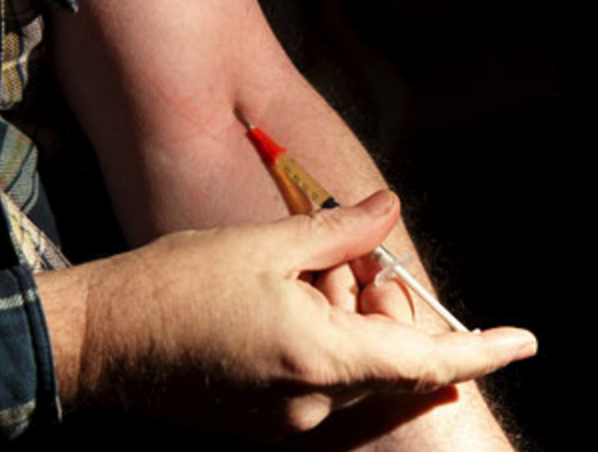
Inject Drugs, Contract Infection, Repeat

Infectious disease physicians are intimately familiar with injection drug use for the obvious reason that breaching the skin and injecting substances directly into the bloodstream is a path to paradise for most microorganism. Unfortunately for humans, that path to paradise is paved with infective endocarditis (infection of the heart valves), abscesses, infections of veins (septic thrombophlebitis), HIV, hepatitis C, and hepatitis B (not to mention anthrax, tetanus, and botulism). Injection drug use is the primary problem with infections following secondarily and unless the injection drug user stops or is able to learn how to inject more skillfully (with clean needles and skin antisepsis) recurrent infections will be the norm.

This weekend I took care of a thirty-something injection drug user who recently had Staphylococcus aureus ("staph"), a common organism that infects injection drug users, in the bloodstream resulting in destruction of two heart valves as well as an abscess in the aorta. This was treated with a long course of antibiotics followed by surgery that involved the use of prosthetic valves and repair of the aorta. The infection was cured for a while until injection drug use resumed and another bloodstream infection ensued with evidence of infection of all the prosthetic material put in place, a dire situation as bacteria form hardy biofilms on prosthetic material that are somewhat impervious to antibiotic therapy. This will be a difficult infection to control or cure and thoracic surgeons don't relish doing these types of repeat surgeries.

This scenario got me thinking about the phenomenon of injection drug use infections of heart valves and the special problems it poses. Because recurrence is the rule, certain rules applied to valve infections/replacements may not necessarily apply For example, using more durable mechanical heart valves in younger patients and bioprosthetic versions of bovine or pig origin in older patients who will not live long enough for the valve to need replacement. In one study, at 5 years less than half (46.7%) of injection drug users endocarditis patients are alive while over 70% of those that are not injection drug users are alive, arguing against the routine practice of using mechanical valves as a matter of routine in injection drug users. 

I don't know what will happen with this particular patient but the important aspect of the case is understanding that unless the primary problem is corrected -- the injection drug use -- no level of aggressiveness in infection management will ultimately change the outcome.


Touring the World of Infectious Disease: A Review of Sonia Shah's Pandemic

For those who want a grand scale overview of infectious diseases and the big concepts that animate the field, Sonia Shah's Pandemic: Tracking Contagions from Cholera to Ebola, and Beyond is, in my opinion, probably the best book to read.

I read a lot -- and I mean a lot -- of books on infectious disease and Pandemic is exquisite in its approach. Using cholera as the main character to concretize important concepts, Shah expertly weaves in every major outbreak in recent years, from E.coli to Ebola, highlighting important elements that time and again have led to outbreaks, epidemics, and pandemics. For example, one chapter is aptly titled "The logic of pandemics."

Shah's book goes beyond a simple historical account and brings in cutting-edge research, hypotheses, and theories. For example, her discussion of the evolution of sexual reproduction as a resiliency mechanism against microbes is fascinating as is the discussion of the advantages and disadvantages of warm-blooded versus cold-blooded animals.

Shah also provides a great dissection of an oft-repeated myth in infectious disease: that microbes lose virulence over time as they adapt to their host. 

I learned an immense of new information pertaining to infectious disease from this book ranging from the geology of Manhattan (particularly conducive to water contamination) to Martin Luther's penchant for eating feces!

This book has layers and layers of valuable information and I recommend it in the highest possible terms to those interested in taking a tour of this endlessly stimulating field with a extraordinarily insightful guide.

Putting Lipstick on a Pig by Removing PERVs

The New England Journal of Medicine, in its Clinical Implications of Basic Research column, covered a remarkable new study that shows just how revolutionary and pathbreaking the CRISPR-Cas9 gene may be. 

The column -- and the research it is based upon -- integrates across the seemingly disparate field of retrovirology and xenotransplantation. Xenotransplantation is the transplantation of organs from an animal species into humans. Even if a safe and effective technique that minimized organ rejection could be found, however, the problem of xenozoonosis would still exist. 

Xenozoonosis is the transmission of an infectious agent via organ transplantation from one species to another. While screening donor animals for exogenous potential pathogens and raising them in sterile environments may be possible, it is not enough. Endogenous retroviruses integrated into the genomes of animals could activate and infect human cells causing novel zoonotic diseases. The fact that these viruses are literally part of the organism whose organs are being transplanted is a very daunting obstacle to overcome. But not for CRISPR-Cas9. 

CRISPR-Cas9, a revolutionary gene-editing technique that is part of bacteria's immune system, can be used to cut and paste genes in a relatively simple manner. In the study (originally published in Science by Yang along with transplant infectious disease pioneer Jay Fishman and the extremely innovative George Church) detailed in The New England Journal of Medicine, CRISPR-Cas9 was employed successfully to remove porcine endogenous retrovirus (PERV) from pig cell lines. For many reasons, pigs will be the most likely source of organs for humans and PERV is known to have the capacity to infect human cells. 

While this is an early study, its implications are far-reaching -- just imagine the impact on organ transplantation waiting list if pig organs could be safely transplanted into humans.

CRISPR-Cas9 may be the discovery of the millenium. 

Be Specific: A Review of Pneumonia Before Antibiotics

When I lecture on existential infectious disease threats -- a subject I am writing a book on -- antimicrobial resistance is what I usually will list as #1, above influenza, above Ebola, above HIV, and definitely above Zika. To me, as a practicing infectious disease and critical care physician, treating infections with multiple-drug resistant organisms is something I do all day and all night. 

When I am asked how to reverse the trend of injudicious antibiotic prescribing which has driven antimicrobial resistance to new heights, I reply we have to be more specific. By being specific I mean that we have to not be satisfied with a generic diagnosis of upper respiratory tract infection, community-acquired pneumonia, or the like. Such non-specific diagnoses engender empiric broad-spectrum antimicrobial therapy when a narrower agent--or often no antibiotic at all--is actually indicated. It seems like it may have always been this way, but that is not the case.

In Pneumonia Before Antibiotics: Therapeutic Evolution and Evaluation in 20th Century America, Harvard's Dr. Scott Podolosky (someone who I have heard lecture before) provides the much needed history of how such a menace as the Captain of the Men of Death was handled prior to the advent of antimicrobials (first sulfa drugs and then penicillin). In a word therapy was specific.

The chief means community-acquired pneumococcal pneumonia -- still a major infectious disease killer--was treated was with type-specific serum. Typing individual patient's strain of pneumococcus might sound as extremely complex and delay-ridden to a modern physician, but it was neither in an era before antibiotics. Podolosky's book, which is ripe with historical detail, illustrates just how this was accomplished and how pneumonia was construed as a public health threat that spawned typing and serum centers nationwide to get the correct type-specific serum to the patient in hours!

The most interesting part of this book which is littered with mentions of such iconic figures in infectious disease as William Osler and Maxwell Finland (to me) is how once sulfa drugs -- cheap, easy to administer, and non-specific -- appeared, the clinical paradigm rocked and shifted as physicians contemplated which countermeasure to use and when combination therapy might be warranted. I expect this same debate to recur soon as the market in infectious disease therapeutics begins to expand to include such specific therapies as monoclonal antibodies, bacteriophages, lysins, and the like.

It will be essential for the forthcoming debates and research on the optimal treatment of infectious diseases to be informed by the important context Dr. Podolosky's work provides.