
HIV & Church Attendance: Mortification of the Flesh, Not Just for Saints

An interesting study appeared in a recent issue of Clinical Infectious Diseases focused on HIV and church attendance. The variable of interest was the presenting CD4+ cell count, a major predictor of morbidity and mortality, and its relationship to church attendance. The study was conducted at UAB in Birmingham, a major HIV/AIDS research center.

The striking finding is that HIV+ men who have sex with men (MSM) and were regular attendees at church were more likely to present for care with CD4+ cell counts less than 200 cells when compared to those who did not attend church. This finding did not apply to men who have sex with women or to women who have sex with men.

One of the implications of this study is that religious proscriptions against homosexual activity (see Leviticus 20:13) may prevent individuals who engage in such activity from partaking in HIV screening activities and subsequently cause them to present for HIV care late, potentially jeopardizing their own health and posing a heightened transmission risk to others.

This finding is not surprising to me and I believe it is the direct result of dogmatic religious ideas that unequivocally confer a negative moral evaluation in a realm in which morality is wholly inapplicable--an individual's unchosen and irreversible sexual orientation.

Would that MSM who attend church cease to sanction their own moral condemnation which, based on the results of this study, has the potential to incite self-immolation.

 

"Is that Mange or Bubonic Plague You're Sporting?"

In the animated feature film, The Nut Job, one of the squirrel characters asks a disheveled appearing rat with  if its appearance is the result of mange or bubonic plague. Being always attuned to the mention of infectious diseases in popular culture I notice that rats are often viewed as harbingers of infectious disease, even by animated squirrels. 

Rats can be vectors of many infections, most notably plague and murine typhus, in which their fleas can spread plague bacteria to humans. But other less renowned infections can be spread as well.

Interesting pathogens that can be spread via the bite of rat are Streptobacilus monilloformis and Spirillum minus. These bacteria cause "rat bite fever", which has been known to occur for over 2000 years. This disease causes rash and arthritis in the most cases. A select group of cases, however, experience relapsing infection that can lead to endocarditis (infection of the heart valves), meningitis, and sepsis. Untreated, the mortality rate can reach 13%. 

Mange, the disease mentioned in the movie, is caused by parasitic mites. Sarcoptic mange is basically the canine version of scabies. Rarely, humans can contract sarcoptic mange, but the affliction is usually self-limited in humans as the mite is unable to complete its lifecycle in humans. Rats have their own specific mites, but can also contract sarcoptic mange. 

Overall, though, rats are not in any way special as sources of zoonotic diseases. However, rats will likely continue to be the subject of heightened scrutiny of health inspectors and the public--as the residents of Hamelin can attest.


Strep and Mono: Bonnie & Clyde or Crips & Bloods?

A recent study published in the Journal of Infectious Diseases provides a great illustration of the intricate interplay between humans and 2 microbes, highlighting how pathogens interact with each other in order to facilitate their spread. 

The study is focused on the interaction between Group A streptococcus (GAS)--the cause of "strep throat"--and Epstein-Barr Virus (EBV), the cause of infectious mononucleosis.

As 20% of children are colonized with Group A streptococcus and EBV persistently infects 90% of the population, the two pathogens may have important influences on each other given that both of their habitats are the oropharynx.

EBV infects cells in two manners, lytically and latentenly. The lytic type of infection results in active viral replication, viral shedding and cell death facilitating spread. The latent type of infection, on the other hand, is relatively quiescent. Understanding what causes the switch from latency to a lytic infection is of great interest.

In this study, it was determined that GAS colonization can prompt EBV to emerge from latency and become lytic and enhance its presence in saliva thereby increasing the likelihood that it will spread to other humans. 

I think that this paper is fascinating because it highlights the fact that pathogens interact, not only with the host, but, with each other in an elaborate manner that impacts transmission. 

EBV's exploitation of GAS colonization is akin to one criminal exploiting the distraction that the presence of a rival criminal creates to go on a crime spree of contagion. Or maybe they're more like Bonnie and Clyde? 


Allergic to Allergies

As an infectious disease physician, I prescribe a lot of antibiotics for various conditions. Some are minor infection and some are life-threatening. One of my pet-peeves are antibiotic "allergies" that are not true allergies. While people may genuinely have anaphylaxis to an antibiotic, the majority of "allergies" that I deal with do not even result in a rash.

What underlies the disparate meanings of allergy is a misconception regarding what constitutes a true allergy. The word allergy derives from the Greek words allos and ergon and, literally translated, means other activity. In effect, a medication or substance (e.g. poison ivy) creates a reaction other than the one expected. 

In modern medical parlance an allergy refers to a hypersensivity to a substance by the immune system. This is manifested by hives, swelling of certain body parts, difficulty breathing, difficulty swallowing, and shock. Nausea, vomiting, headaches, abdominal pain, diarrhea, and anxiety are not the result of allergies. They are known side effects of certain medications and do not usually preclude their use unless truly severe or debilitating. 

When an individual reports an unknown "allergy" to say penicillin ("My mom said I had a reaction to penicillin of some sort when I was a baby"), healthcare providers do one of two things: ascertain whether this was a true allergy or pick another drug--the usual reaction. Often, the alternative drug is more expensive, not as effective, side effect prone, and broader in terms of antimicrobial spectrum than needed. 

Reclassifying those without true antibiotic allergies would go a long way towards improving antibiotic stewardship. 

The Creature from Norwalk Ohio

Today CNN is reporting an outbreak of norovirus on a Royal Caribbean cruise ship. Thus far, 66 individuals have been infected.  

This virus, named for the city in which it was first discovered (Norwalk, OH), is the most common cause of acute gastroenteritis, colloquially known as "stomach flu", in the US, where it causes over 20 million infections annually.

Norovirus outbreaks on cruise ships (and in other locales, including national parks) are nothing new but pose huge societal problems because of the disruptions that ensue upon their arrival. When norovirus strikes--this, I know from personal experience--24 hours of so of one's life are going to be spent in the bathroom. 

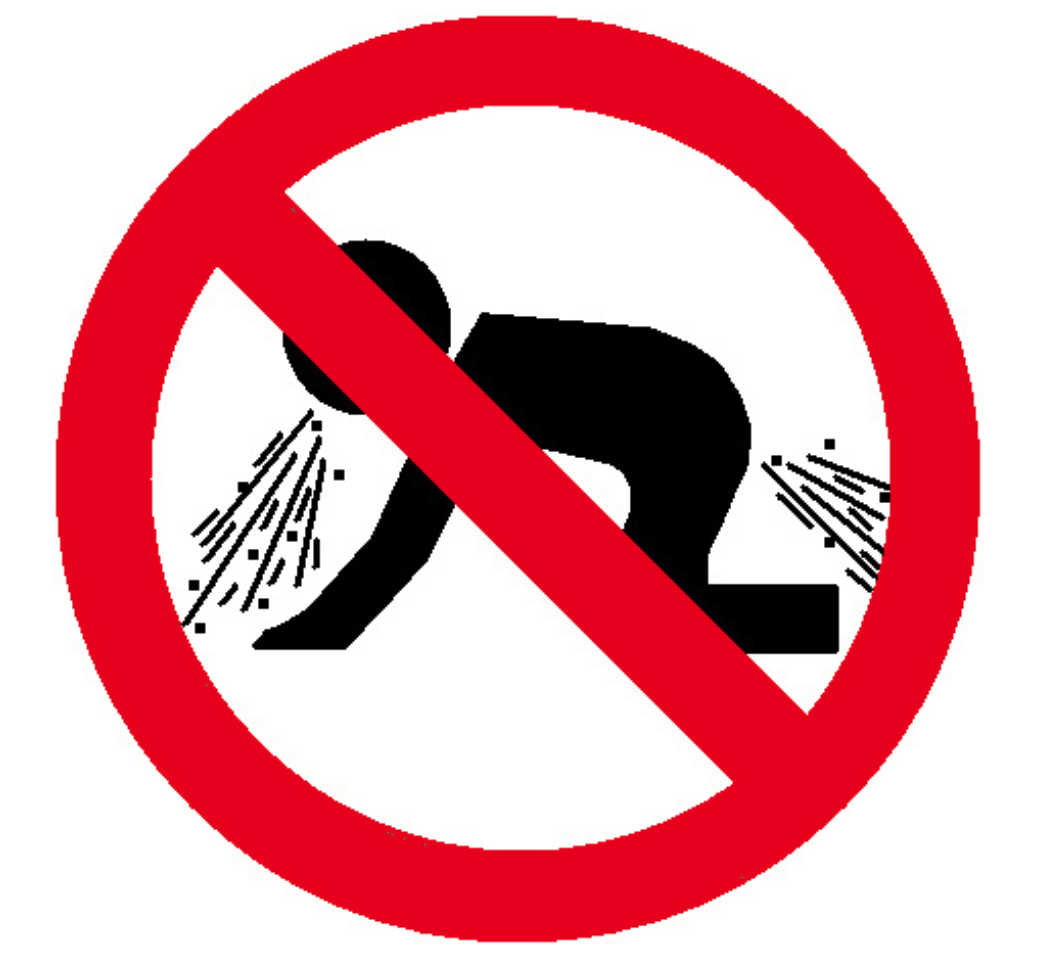
While the diarrhea is bad, it is the violent vomiting--which often seizes one suddenly--that, to me, is the worst aspect of this dreaded disease. The vomitus (what is vomited up) is highly infectious and hand washing with alcohol-based substances alone may not be enough to deactivate the virus.

There are no vaccines or anti-viral treatments for norovirus, though anti-nausea medications (e.g. Zofran) can be lifesavers. 

Too bad there isn't a special "vomit powder", similar to what the maintenance staff would sprinkle on our vomit in school, for this despised virus.