Chimeric Pathogens: Something for Everyone?

Snip20140720_29.png

In the 2011 film Take This Waltz a character played by Michelle Williams "playfully" states to her husband (played by Seth Rogen): "I love you so much that I'm gonna inject your face with a curious combination of swine flu and ebola."  This crazy line prompted me to think about the topic of pathogenic chimeras--no surprise for someone looking for infectious diseases everywhere.

Interest in chimerical pathogens is understandably fascinating but something I find kind of puzzling because pathogens on their own are usually sufficiently deadly. 

However there has been genuine interest in chimerical pathogens proving that this is not a phenomenon just restricted to fiction. For example, the former Soviet Union's bioweapons program (the existence of which was recently denied by Putin decades after Yeltsin admitted its existence) attempted to develop combinations of pathogens such as Venezulean Equine Encephalitis Virus and Vaccinia, possibly for vaccine  and/or virulence increasing offensive purposes. There are also sorts of rumors about chimeras involving Ebola and Smallpox.

The line also made me think about the fact that chimerical pathogens aren't solely the result of human ingenuity and genetic engineering, as many chimeras exist in nature.  A few important chimeras occur in nature. Some important examples of natural chimeras include:

  • Influenza viruses that are the result of gene swapping between avian, human, and swine strains
  • Toxigenic strains of Cornyebacterium diphtheriae, the bacteria that causes diphtheria, which are infected by a bacteriophage that elaborates the namesake toxin prompting symptoms
  • E.coli O157:H7, as it elaborates a toxin derived from Shigella bacteria

Also, bacterial strains such as vancomycin-resistant Staphylococcus aureus are also chimeric in that they gain antibiotic resistance by acquiring the requisite genes from vancomycin-resistant enterococci.

Genetic information is transferrable so it should be no surprise that chimeras are a part of nature. Indeed, they sort of exemplify the malleability inherent in evolutionary biology.

Thinking about the topic more broadly, chimeras of all sorts capture people's imaginations. Perhaps its natural to want to create or have enhanced versions of everything? For example, the uppercut of Mike Tyson coupled to the footwork of Mohammed Ali; the guitar skills of Eddie Van Halen and Angus Young in one person; or, one of my childhood favorites, Serpentor

Not Your Father's Syphilis

I just finished reading Robert Harris' An Officer and A Spy which fictionalizes The Dreyfus Affair, a horrible miscarriage of justice that occurred in post Franco-Prussian War France. 

There was only one mention of an infectious disease in the novel and it involved Colonel Jean Sandherr, the head of counter-espionage for the French military responsible for the false case against Alfred Dreyfus.

Harris describes Sandherr as suffering from general paresis caused by syphilis. This complication occurs in late stage syphilis in which the invading spirochete, Treponema palladium, has caused a chronic meningitis that leads to degenerative changes in the brain. 

Every so often, I get consulted on a case of an elderly individual being worked up for dementia because, as part of that workup, a syphilis test is ordered and returns positive. While I've never seen a case of general paresis, these individuals have "late latent" syphilis and undergo treatment (which never really changes the course of their dementia). 

Common in earlier eras, this stage of syphilis is quite rare today. However, the earlier stages of syphilis still abound and, in recent years, the bacterium has become tech-savvy as it has now begun to use social-networking sex apps to find new victims. It seems to have found success  as cases doubled between 2005 and 2013, primarily in men who have sex with men.

At least there's no worry about syphilis being bewildered in the modern digital world because included in the internet of everything are the every resilient STDs. 


Chikungunya Gets Its Green Card

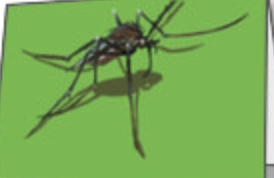
It comes as no surprise that autochthonous chikungunya has occurred in Florida. The simple maxim that must be kept in mind with respect to vector borne diseases is: if a competent vector exists in areas in which imported cases are occurring, it is only a matter of time before local vector populations contract the pathogen.


Florida is an area hospitable to Aedes mosquito and has been plagued with locally-transmitted dengue for several years. As chikungunya shares many of the same characteristics of dengue, it is no surprise that it has found welcome in Florida. 

Intensified efforts to control the vector, which is already ongoing for dengue, will likely occur. However, it may be exceedingly difficult to eradicate chikungunya if it has thoroughly settled in local Aedes population.

For a great overview of these issues see this recent NEJM piece by Fauci and Morens. 


Lions, Tigers, & Bears or Anthrax, Smallpox, & Bird Flu

Today it was announced that the recently discovered smallpox vials contained viable virus that was infectious. This is not too unexpected given that these were freeze-dried specimens.

However, the other piece of news that accompanied this announcement was that, over the last decade, there were 5 lapses in which dangerous pathogens, including the H5N1 influenza virus, were sent improperly to other laboratories from the CDC. The revelation of these incidents has prompted CDC to cease operations at two labs and impose a "moratorium" on specimen shipping from some CDC labs. 

What strikes me as the most important part of the story, however, is the issue of the Select Agent Rules. After the anthrax attacks of 2001 there was a major effort by the US government to impose strict control on the laboratories doing work on certain pathogens that were particularly dangers (hence, select agents).

Many university laboratories, including the ones in my own institution, struggled to meet these requirements. I personally know of one tularemia researcher who had particular difficulty meeting all the regulatory requirements to receive a non-virulent strain of the bacterium.

This laxity by some government personnel gives the impression that although university labs work diligently to comply with such regulations, their government counterparts have not exerted the same level of diligence. The belief that a two-tiered system exists coupled with the lapses that have occurred is something that could harm the public's confidence in this vital research and potentially jeopardize it -- a scenario that is more dangerous than finding decades-old smallpox vials.


Who Left Their Smallpox in the Closet?

The revelation that 6 vials of smallpox--the only human disease mankind has eradicated--were found in an FDA storage room at the NIH will likely grab headlines and spark concerns of a smallpox outbreak. However, I do not anticipate this event will amount to much. 

As is widely known, smallpox was eradicated from the planet in the 1970s and vaccination soon stopped. This cessation of vaccination has rendered most of the population susceptible to smallpox...if it were to return through an accidental lab release or deliberate attack--a major concern for those in the fields of biosecurity and bioterrorism.

In the post-eradication era, the known stocks of the virus are kept in secure locations at the CDC in Atlanta and the Vector Institute in Novosibirsk (Russia). The retention of the virus has sparked continual debate at the World Health Assembly regarding whether these stocks should be destroyed or retained. 

Further testing remains to be performed to determine whether what was found at the NIH was viable virus and the fact that it was freeze-dried may have preserved infectivity. Indeed, the vials have tested positive for smallpox DNA and the next step will be to assess whether the virus can be cultivated in culture. Nevertheless, though these vials do not pose any risk to the general public, the fact that forgotten stores of the deadly virus exist in the US makes it all the more possible that such remnants exist in other parts of the world.