Tetanus Vaccine: Making Rusty Nails Less Scary

When I was a child I was scared to death over tetanus, chiefly because my babysitter would "entertain" me with horrific stories of one of the severe complication of tetanus, "lockjaw". Although I was fully vaccinated, rusty nails became the rattlesnakes in my backyard and it was hard for me to fathom that someone would not be vaccinated against tetanus.

This all came back to mind when I read about the recent events in Kenya where the vaccine is being erroneously labeled by the Catholic Church there as a population control scheme.

If there was genuine concern for reproductive matters in Kenya it would be tetanus--not the tetanus vaccine--that would be recognized as the real threat. Maternal and neonatal tetanus claim over 100,000 lives per year in Africa and the vaccine is literally life-saving. I have seen exactly zero cases of tetanus due to the high penetration of the vaccine here in the US.

If one were to contemplate nefarious population control mechanisms, infectious diseases would be first on the list; indeed, throughout most of human history they have served in this role. It is only after the technological breakthrough that brought us vaccines, that the human race has been able to flourish into old age. 

The anti-vaccine movement, in all of its incarnations, represent the return of the primitive.


Familiarity Should Not Breed Complacency with Influenza

There is a deadly infectious disease about to pounce on the US populace and I have already seen some early cases, yet no alarm bell has sounded. As you can probably guess, the disease I am referring to is influenza. 

A few weeks ago, during one of my occasional shifts in my hometown ED, I diagnosed a case of influenza B in a patient with shortness of breath using the poorly sensitive rapid antigen test that is widely available. The patient was admitted and placed on Tamiflu (oseltamivir). This season, I have sent several rapid antigen tests all of which were negative on similar patients. This fact likely means that many flu cases are not being diagnosed because the rapid test is just not good enough to detect all cases. CDC data suggests that 6% of tests are positive at this time and, thus far, there has been one pediatric death from flu in North Carolina.

At the start of the flu season stutters and sparks herald the first exploits of the virus in the current season and, judging by the experience of the Southern Hemisphere, we may have another severe season. 

In the ICU portion of my career, I have been involved with the management of individuals who present with fevers, cough, chills, and muscle aches and end up in the ICU because of severity. Such individuals clearly fit the case definition and hence should be appropriately tested. While the more sensitive PCR test results are pending in those with severe symptoms or comorbidities--especially pregnancy (or if rapid antigen tests are used) Tamiflu should be started empirically.

While people are clamoring over Ebola and many are being ruled out for this infection, the familiar--but by no means tame--influenza virus may go undetected because it is not tested for with enough frequency or is tested for using obsolete technology. To compound the problem, Tamiflu is woefully underused despite its capability to lessen severity as is the influenza vaccine.

As the current flu season evolves, familiarity should not breed complacency.


Severing the Ebola Hydra's Head

Yesterday it was announced that two states--New York and New Jersey--are instituting a mandatory quarantine for healthcare workers returning from treating Ebola-stricken patients in West Africa. This quarantine was fueled by the panic engendered by the diagnosis of Ebola in Dr. Craig Spencer and not by any scientific basis regarding its efficacy.

There are several points to consider regarding this unwarranted quarantine:

1. Ebola is not contagious during its incubation period and when contagious is so only via contact with blood and body fluids. Those in the incubation period of Ebola pose no risk to others.

2. Healthcare workers in these states are already self-monitoring themselves for signs/symptoms of illness as well as subject to active surveillance by the local health departments. What added benefit will the quarantine have other than to assuage and validate panic? 

3. Such a quarantine basically will have a stultifying effect on those from New York and New Jersey who want to travel to ground zero to fight this virus at its source since they will be subject to a 21-day quarantine upon return, irrespective of symptoms.

The basic fact about this outbreak, often lost in the shuffle is that, akin to an actual war, taking the battle to the homeland of the aggressor is the only way to remove this risk. On that front, we suffered a major setback with Ebola's incursion into Mali. Just like Sherman's march on the South and Scipio Africanus' victory in Carthage, the immortal head of this Hydra must be severed in Africa.

A Week of Birthday Presents from Ebola

My wish list

My wish list

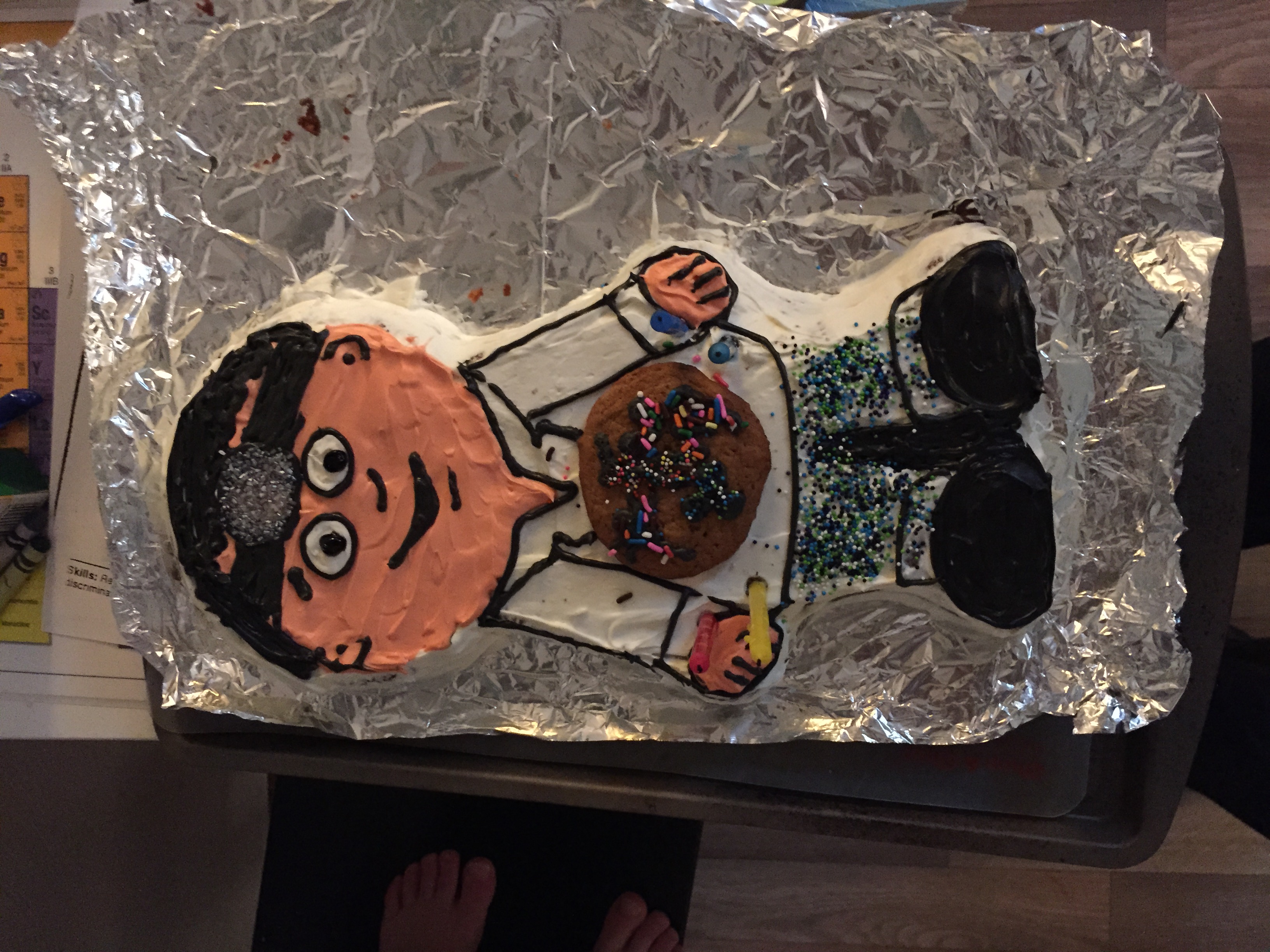
This week I celebrated my 39th birthday and though I got formal presents (none of which are pictured, but my cake and Petri dish cookie is), Ebola continued to "bless" us all with new gifts, including the 2nd Texas healthcare worker's infection and her unfortunate CDC-sanctioned travel.

As I argued in my recent Time op-ed, these healthcare worker infections in the US provide incontrovertible evidence that not every hospital is prepared to deal--as they should be--with all aspects of an Ebola patient's care. This evidence was not something I welcomed as I had been someone who was completely convinced Ebola would not have secondary spread within the US. This shattered belief of mine stemmed from the history of uneventful importations of Lassa Fever, Marburg, and MERS. 

That healthcare workers who cared for the critically ill Thomas Eric Duncan are the ones who were  infected, as opposed to his circle of direct contacts who are about to complete their quarantine periods, argues that the modern ICU environment, with its tubes, invasive procedures, and central venous lines, is a terrain that Ebola has found conducive to its spread. It may be the case that in ordinary (i.e. non-critical) cases of hospitalization, Ebola may be stymied.

This is a virus that remains less contagious than many others and has a restrained ability to spread between humans, save to caregivers (healthcare workers or others). However, the virus has evolved to exploit any lapse in the barrier precautions employed by those who are in its midst. These lapses can not occur for this is an unforgiving virus.

The first priority in ensuring that additional healthcare worker infections do not occur is to:

The cookie is a Petri dish of different bacteria

The cookie is a Petri dish of different bacteria

1. Stop this outbreak at its source--the head of the hydra is in West Africa and that is where the battle must be waged aggressively. The recently leaked WHO document illustrates how a gross initial underestimation of the outbreak's potential for spread in West Africa allowed this outbreak to fester longer and gain an incredible head start that transformed later interventions into mere squirt guns in the face of a raging forest fire.

2. Treat any additional imported or healthcare worker cases in the biocontainment facilities at the NIH, Emory, and Nebraska. Though scarce, these facilities have proved their adeptness at handling Ebola cases safely. This should be our 1st tier and hopefully will be able to absorb what will only be a trickle of imported cases.

3. Designate additional facilities in every region of the US that have some capacity to care for Ebola patients safely and can be used as 2nd tier facilities. These facilities must be thoroughly educated, drilled, and prepared to handle Ebola patients. Protocols and passive education will not be enough.

4. Dampen the panic that is now, understandably, widespread amongst the public through concise, clear communication based on scientific facts. Ruling out Ebola in every vomiting frat boy is unproductive and a poor use of resources.

5. Determine what the role of invasive interventions on Ebola patients should be going forward. It is likely that early recognition and treatment of Ebola patients with aggressive fluid resuscitation is essential and possibly able to forestall the dire complications that Mr. Duncan suffered. Is the benefit of such procedures as dialysis and mechanical ventilation outweighed by the risk to healthcare workers? Do such procedures actually improve outcomes? 

All our actions to stop Ebola must be thoroughly informed by the facts and instantaneously integrated with any and all new discoveries that emerge. By facing this pathogen with active minds--mankind's ultimate resource and game-changer--it will be stopped.


Some Questions About the 2nd case of Ebola diagnosed in the US

A few important details regarding the healthcare worker who cared for Mr. Duncan will be key to interpreting the transmission that occurred:

  • Was this healthcare worker part of the 10 definite direct contacts or 38 possible direct contacts that were being monitored? (We know 7 healthcare workers were included in the 10)
  • Was this healthcare involve, at all, with the care delivered during Mr. Duncan's 1st visit to the emergency department during which Ebola was not suspect and no isolation of him was performed? 

Ebola requires meticulous attention to infection control procedures--often something easier said than done--and clearly poses disparate risks to the healthcare worker and general populations. Presumably this healthcare worker, who developed fever and hence became symptomatic and contagious on Friday evening, was immediately isolated delimiting those with direct contact.