

It's Remarkable What a Little Chlamydia Will Do

In the film The Other Woman, the character played by Kate Upton uses the potential of having chlamydia as a way to excuse herself from having sex with the villain who then promptly takes the antibiotic azithromycin (Z-Pak) and offers it to his wife because something "nasty" is going around. 

With 1.4 million cases reported in 2013 (an 2-fold underestimation) it is clear that people in real life are as astute as even the villain in the movie. Chlamydia is a ubiquitous disease and is the reigning champion as the most commonly reported sexually transmitted infection in the US. It is present in about 2% of those aged 14-39 years of age. Untreated it can lead to pelvic inflammatory disease and infertility; neonates can contract chlamydial eye infections. Guidance recommends screening sexually active females under the age of 25 yearly, men who have sex men, pregnant females, and other high risk groups.

Judging by those statistics, it is clear that the transmission dynamics of this microbe seem incredibly suited to widespread dissemination through the population. The chief factor is the high rate of people without symptoms (90% of men and up to 70-95% of women) who can serve as vectors for spread of chlamydia. Also, infections of the pharynx and rectum (a Z-Pak may be less effective with rectal chlamydia) can play roles as hidden reservoirs of infection. A recent Canadian study revealed up to 13.5% of woman had rectal chlamydia, some irrespective of anal intercourse of presence of the organism at other sites.

The salient point is that infections that are asymptomatic but yet contagious will always be a challenge to control.

The movie also has another infectious disease reference--this time to pork tapeworms causing brain infections (cysticercosis), a major cause of seizures worldwide. However, the script got it wrong. Eating undercooked pork gives one an intestinal tapeworm, not the brain manifestations. If, however, one eats the tapeworm eggs found in the feces of someone with an intestinal tapeworm, they can get cysts in the brain.

Pork tapeworms and chlamydia in the same post: almost like an infectious disease version of 6 Degrees of Kevin Bacon (no pun intended).

Understanding the Revolutionary Germ Theory

When the germ theory of infectious disease is discussed today, it is almost second nature and obvious. Indeed when a new syndrome appears, everyone assumes it will turn out to be the result of an infection with some sort of microbe. 

However just like gravity, the heliocentric solar system, and evolution by means of natural selection, the germ theory of disease had a rocky start and was opposed by virtually everyone at its inception.

What I've always wanted to read was a history of the development of this theory that presents each of the major steps forward in an easily integratabtle format. While many people have some idea of the role of those such as Pasteur, Koch, Lister, Semmelweis, and others, many do not understand how their findings integrate and their relative chronology. Dr. Robert Gaynes ably fills this gap with his book Germ Theory: Medical Pioneers in Infectious Disease

The book provides vignettes of all the major figures who had a hand in the path to the germ theory. Dr. Gaynes expertly shows how each discovery built on the prior and led to the next, essential for truly grasping how science advances in any of its branches.

I think the next step in furthering this line of inquiry is to draw attention to the deductive and inductive methods used by these brilliant minds. Such an analysis would highlight important cognitive principles and habits useful in all realms of human endeavor (an aspiration of mine).

Understanding of how an earlier revolution in medicine (the germ theory) occurred is crucial to understanding how the next--which will encompass data analytics, systems biology, synthetic biology, and nanotechnology--will occur.


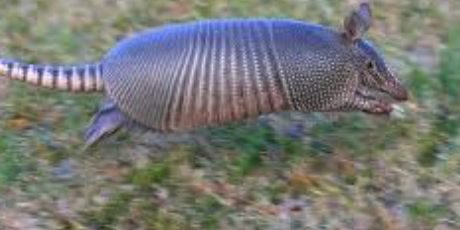
If a Scorpion Hugged an Armadillo, would it contract Leprosy?

Of all the infectious diseases in history, one that has gotten an unwarranted bad rap is leprosy, or Hansen's Disease. This disease, which is mentioned in the bible, has become synonymous with contagion--but it's not really a very contagious disease at all. 

Hansen's Disease, caused by infection with Mycobacterium leprae (and also M.lepromatosis), is a chronic disease that effects the respiratory system nerves, skin, and mucus membranes. It is by no means incurable as it is amenable to treatment with antibiotics. It is spread from person-to-person via the respiratory route. It's natural host is the armadillo. In 2009, a little over 200 new cases were reported in the US.

What most people don't realize however, is that 95% of humans are unable to be infected because of a specific genetic resistance conferred via their immune systems.  This means that far from being highly contagious, leprosy's transmissibility between humans is seriously hobbled. 

All of these facts have been known for sometime but it didn't stop the creation of leper colonies (e.g. Molokai in Hawaii) or other unjustified control measures in the not too far past. These misconceptions persist to this day and have penetrated deeply into popular culture. Case in point: the television program Scorpion. On a recent episode, one character states to another that he hugs as if he's at a leper colony. Such a comment is based on an extremely erroneous notion of leprosy's contagiousness.

What this brief mention on a tv program illustrates is the need to educate people on the difference between highly contagious infectious diseases and those that are less contagious. Such a point was something that I sought to make, over and over, with Ebola lest unjustified control measures be instituted as they were with leprosy. 

When Uncle Sam Battled Malaria

It is said that half of all humans who have ever lived died from one cause: malaria. It's hard to imagine any disease having a toll like that. However, the prowess of malaria is something that has modified human behavior--and indeed genes--for a very long time. 

A book I just finished tells the remarkable story of how the WWII-era US military engaged in all out war against this microbe that had a real potential to derail the war effort. Johns Hopkins University lecturer Karen Masterson expertly details the extensive history of these efforts in The Malaria Project: The U.S. Government's Secret Mission to Find a Miracle Cure.

The book reads almost like an adventure story chock full of memorable characters that range from revered generals and scientists to sociopathic murderers as well as Dr. Suess. The events take place on almost every continent and tell the story of how all our modern anti-malarials came to fruition while also addressing important issues such as experimentation on prisoners. The book also concretizes why, even to this day, the military has such a strong interest in infectious diseases--in a phrase: force protection.

The sheer amount of material that Ms. Masterson must have had to find and analyze in order to produce this exciting and highly educational narrative must have been daunting. The benefit one gets from reading the book, by comparison, is a bargain because of her diligent work.


Lindsay Lohan Battled Mean Girls, Now a Mean Virus

When a celebrity contracts an infectious disease it's kind of a mixed blessing. On one hand, awareness of the illness skyrockets but on the other it's kind of frustrating that the media pays much attention only when a celebrity contracts the illness.

Such is the case with Lindsay Lohan's recent bout with chikungunya which has caused millions of cases in the Caribbean, hundreds of importations to the continental US, and even caused mosquito pools in Florida and Texas to become infected with the virus. In Florida, 11 cases of local transmission have occurred from infected mosquito pools. 

Since there is no antiviral or vaccine for chikungunya, the chief means of combating this disease, which can cause debilitating joint and muscle pains, is to avoid being bitten by the Aedes mosquitoes that harbor the virus. Easier said then done, however, as people who frolic in the Caribbean don't have a habit of donning clothes that cover their bodies or wearing mosquito repellent consistently. What does work, however, is to reduce the breeding sites of the mosquitoes by removing standing water and receptacles (e.g. bird baths, tires, etc.) that collect water.

It's clear that Ms. Lohan's infection and her public statements on her illness will focus more attention on this disease and that is unequivocally a good thing. 

Plus, we know the Mean Girls were no match for her and, hopefully, this mean virus will succumb as well.