Treat Your Children Like Puppies: Vaccinate Them!

The origin of the measles virus, currently capturing headlines across the country with 121 cases in the US (and 147 in the region of the Americas) so far this year, is likely zoonotic. Like almost every infectious disease of humans, animals likely played a part and the virus jumped into humans. The virus that measles evolved--I wanted to use that word on Darwin Day--from is canine distemper. 

Canine distemper virus is a member of the same viral family as measles (paramyxovirus) and was first described in the early 20th century. The symptoms it causes include fever, nasal discharge, and eye inflammation (sound familiar?). Vomiting and diarrhea, lethargy and loss of appetite, labored breathing and/or coughing, and hardening of footpads and nose, and other symptoms can also occur. It is vaccine preventable and remains a leading cause of infectious disease death in dogs. 

There is good reason to believe that canine distemper virus (or the related and now eradicated rinderpest virus of cattle) jumped into humans and evolved into measles when human populations reached the threshold population density needed to sustain human-to-human transmission of the virus. Indeed measles vaccination protects canines against distemper.

It's puzzling to me that we don't hear about an anti-vaccine movement amongst dog owners yet amongst parents of human children we have no such luck.

Children deserve to be treated as well as their puppies.


Dissecting One of the Philosophical Underpinnings of Vaccine Opposition

Andrew Taylor Still DO, MD (1828-1917)

Andrew Taylor Still DO, MD (1828-1917)

If one is to understand a cultural phenomenon, it is important to discover its root cause. The anti-vaccine movement is one such phenomenon. If one delves into this movement myriad roots will be found. One I find particularly intriguing—and misguided—is the belief that contracting illnesses “naturally” (as if it’s natural to be sick) and allowing the body to fight unaided is preferred to availing one’s self of the protection afforded by a vaccine.

Consider for instance, the ridiculous notion of the measles parties (they also come in the chickenpox variety) which California public health authorities had to actually warn people against. I am not certain where this idea originated but it seems to me to be an amalgamation of the cliché “what doesn’t kill you, makes you stronger” with the fact that humans have evolved exquisite immune systems that can dispense with various invaders quite easily.  But, our immune systems have limits and, in some cases, drive the pathophysiology of disease when the invading microbe is attacked (see the damage-response framework). Hence the need for vaccines to augment our defenses stems from the attributes of our immune system.

 The origins of this line of argument became a question I wanted to contemplate after I watched an excellent Johns Hopkins Bloomberg School of Public Health seminar on measles yesterday. In this seminar, an intriguing bit of data was presented showing that having a doctor of osteopathy (DO) as a primary care physician was associated with higher rates of abstention from vaccination.

 This was puzzling to me because in every day life I work side-by-side with DOs, I've trained with them, and I consider them equals. However, I am aware that the origin of the DO pathway in the 19th century began with a break from the approaches of allopathic medicine. Could the disparate philosophical origins of allopathic and osteopathic medicine be playing a role?

 To investigate this one facet of the anti-vaccine further, I did some more reading and found several facts that supported the notion of a DO/MD discrepancy (source Salmon, Human Vaccines 2008; Mergler, Vaccine 2013):

·      Doctors of vaccinated children are 2.5 times less likely to be DOs

·      MDs were found to be 2.8x more likely to have patients whose parents believed vaccines were safe

·      DOs were less likely than MDs to have a high confidence in vaccine safety

·      DOs were more likely than MDs to agree or strongly agree with the following statements:

o   Children get more immunizations than are good for them immunizations do more harm than good

o    any of the reports of serious side effects from vaccines are accurate

o   CDC/ACIP underestimate the frequency of vaccine side effects

·      DOs were less likely than MDs to agree or strongly agree with the following statements:

o   Immunizations are one of the safest forms of medicine ever developed

o   Immunizations are getting better and safer all of the time as a result of medical research

 So why the divergence between DOs and MDs, those who have essentially the same undergraduate and post-graduate training? I hypothesize that the answer lies in the philosophy of osteopathy, articulated by the founder of osteopathic medicine Dr. Andrew Taylor Still (MD). In particular, I am referring to the osteopathic tenet of the body having a natural ability to heal itself—a true statement, but only within a certain context.

 It’s important to note that when Dr. Still developed his ideas medicine was still in its infancy and many interventions did more harm than good. In that setting, leaving someone alone rather than bleeding or poisoning them was definitely an improvement.  But Dr. Still did not stop there. He went further and attacked the only vaccine available at the time—one which was ultimately responsible for the only eradication of a human disease in history—calling Jenner’s smallpox vaccine a “hopeless failure” and offered many of the same arguments against vaccines that are still heard today.

 Sure bones can heal and minor infections like the common cold dissipate on their own but severe infections like measles and smallpox are an entirely different matter.

 So where does that leave us today? The osteopathic physicians of today are much different than those of the 19th and early 20th century but clearly the mixed legacy and ideas of Dr. Still persists. This remanant may lend false credibility to those who advocate experiencing dangerous infectious diseases naturally. I know excellent osteopathic physicians in almost all specialties and subspecialties, including infectious diseases.  Indeed the American Osteopathic Association has voiced strong support for vaccination. I think it essential that these physicians extoll the benefits of vaccination to their colleagues in primary care and to the schools of osteopathic medicine to give the anti-vaccine movement no refuge. 

Even Captain America Needs a Robust Microbiome

Captain America and Agent Carter exchanging microbiomes

Captain America and Agent Carter exchanging microbiomes

I can't count how many times people ask me about what the "germiest" place in a home, car, or gym is. What I think such a question overlooks are several basic facts about the planet:

  1. We live in a world dominated, in terms of biomass, by microbes.
  2. Our own bodies, soon after birth, are colonized with so much bacteria that eventually bacterial cells come to outnumber human cells.
  3. The majority of bacteria do not do us harm or damage our bodies.
  4. Our native bacterial species, our microbiome, is essential for life. Not only do bacteria perform vital functions for us, such as vitamin K synthesis, they also crowd out and serve as a barrier for potentially harmful bacteria. 

Given these facts one should view any desire for ultra-sterility in daily life (obviously sterility is needed in operating rooms and hygiene when preparing food) as misguided and potentially harmful. However this realization came to be fully appreciated rather recently in light of growing interest in the microbiome and the consequences of its disruption as well as the hygiene hypothesis

So, it wasn't surprising to see Marvel's Agent Carter, a Captain America-related television series set in the 1940s, warn of the danger of acquiring a bacterial infection from a public phone. Though a public phone--when you can find one--is likely laden with bacteria, unless one has abrasions and lacerations on the face, it poses no more risk than playing a game in an arcade. 

So if a baby's pacifier falls on the floor, don't rush to have it autoclaved (of course if it falls in horse manure, that's a different issue); if you have an abrasion, put a Band-Aid on it; and don't abuse antimicrobial hand-sanitzers. 

A robust microbiome is important for everyone, even Captain America.

Vaccines: Nectar for Human Flourishing

With all the media attention, and now political attention, on the measles outbreak and the anti-vaccine movement, I composed a few thoughts on these issues:

  • All schools have a right to set conditions of enrollment and, moreover, no school should want to be labeled a nidus for the spread of vaccine preventable infectious disease and have high rates of absenteeism because of illness
  • With respect to the public government schools, the government acts as their  administrator and, given that role it has assumed, can set the rules for enrollment
  • Vaccination requirements for schools should be considered a student safety issue, akin to healthcare worker vaccination requirements
  • Certain vaccinations are much more important for a child in the US to have than others (e.g. Japanese Encephalitis is less important than measles)
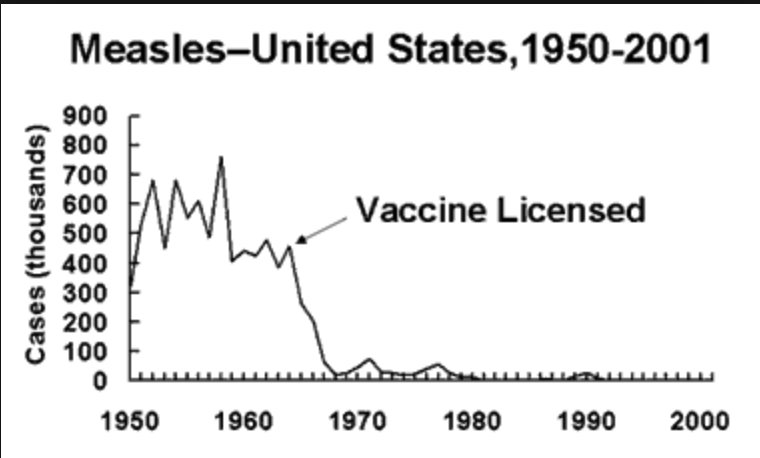
  • Until eradicated from the globe, vaccines against a highly communicable infectious diseases such as measles (whose indigenous transmission has been eliminated from the Americas), are crucial at keeping the disease from re-establishing itself in the US
  • Certain infectious diseases pose such a risk that to refrain from vaccinating a child is tantamount to neglect (this list will be fluid and be context dependent)

Hopefully, the current measles outbreak (not to mention pertussis) will bring these issues to light and expose the motives and goals of the anti-vaccine movement which can only be described as a return to the primitive in which life was nasty, brutish, and short. 

It's Remarkable What a Little Chlamydia Will Do

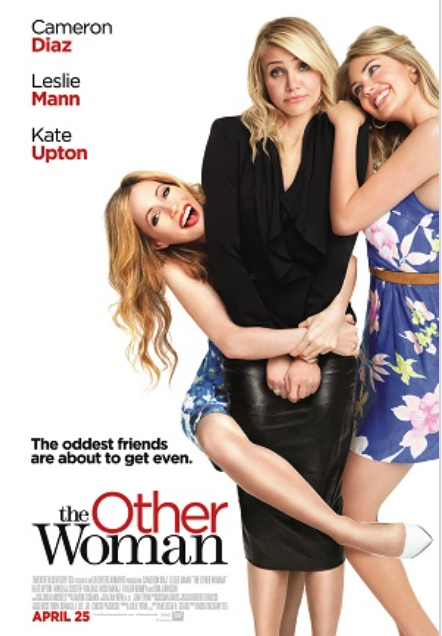
In the film The Other Woman, the character played by Kate Upton uses the potential of having chlamydia as a way to excuse herself from having sex with the villain who then promptly takes the antibiotic azithromycin (Z-Pak) and offers it to his wife because something "nasty" is going around. 

With 1.4 million cases reported in 2013 (an 2-fold underestimation) it is clear that people in real life are as astute as even the villain in the movie. Chlamydia is a ubiquitous disease and is the reigning champion as the most commonly reported sexually transmitted infection in the US. It is present in about 2% of those aged 14-39 years of age. Untreated it can lead to pelvic inflammatory disease and infertility; neonates can contract chlamydial eye infections. Guidance recommends screening sexually active females under the age of 25 yearly, men who have sex men, pregnant females, and other high risk groups.

Judging by those statistics, it is clear that the transmission dynamics of this microbe seem incredibly suited to widespread dissemination through the population. The chief factor is the high rate of people without symptoms (90% of men and up to 70-95% of women) who can serve as vectors for spread of chlamydia. Also, infections of the pharynx and rectum (a Z-Pak may be less effective with rectal chlamydia) can play roles as hidden reservoirs of infection. A recent Canadian study revealed up to 13.5% of woman had rectal chlamydia, some irrespective of anal intercourse of presence of the organism at other sites.

The salient point is that infections that are asymptomatic but yet contagious will always be a challenge to control.

The movie also has another infectious disease reference--this time to pork tapeworms causing brain infections (cysticercosis), a major cause of seizures worldwide. However, the script got it wrong. Eating undercooked pork gives one an intestinal tapeworm, not the brain manifestations. If, however, one eats the tapeworm eggs found in the feces of someone with an intestinal tapeworm, they can get cysts in the brain.

Pork tapeworms and chlamydia in the same post: almost like an infectious disease version of 6 Degrees of Kevin Bacon (no pun intended).