If it Doesn't Fit, You Must Acquit: Decoding Canine Fecal Crimes

I don't mean to be continuing on the theme of feces (it seems to be a topic many are interested in) but some new developments are not ignorable. 

When people talk about the role of genomics, next generation sequencing, and personalized/precision medicine it is often in the context of improving human health. Undoubtedly, these technologies have broader applications and have revolutionized forensic science, for example.

The newest application seems to be just as an innovative as the mainstream applications. While you might think it might involve creating hybrid creatures, understanding dinosaurs, or looking for life on asteroids it is much more this-worldly and is so down to earth you've probably had it on the bottom of your shoe a few times. 

The new application is the genetic sequencing of dog poop to determine whose animal emitted it. The company that performs this very vital service is aptly named PooPrints.

This development reminds us that, amongst all the blind alleys science may lead us down if, in the darkness, we step in something we can find the culpable party.

Civilization Is Avoiding Immersing Oneself in Feces

When it comes down to it, one of the major life-enhancing aspects of modern civilization is the fact that it has removed a lot of poop from our daily life. For most of humanity's existence people's hygienic habits were, in some respects, a little gross. When humans were all just hunter-gathers who nomadically moved around, sanitation took care of itself as people did not literally sit in their own stuff. When agriculture and farming--unmitigated technological advances--were developed people become more stationary as they began growing crops and raising livestock. This scenario created a condition in which people lived amongst their own sewage.

Sanitation, outhouses, and plumbing, in essence, allow there to be some separation where a person ate, slept, and lived from where they did their...other business. Gone are the bed pans and cesspools that littered the cities of the 18th and 19th century in which being a "night soil man" was a real career.

Now, anytime we hear of a raw sewage exposure in a, for example, recreational waterway it is major news. The 21st Century human has no tolerance for a feces-filled life (though we still are exposed to feces in everyday life all the time, just much more surreptitiously).

However, the world's elite athletes are literally poised to be swimming in it, quite literally, if Rio's waterways remain as feces-ridden as they currently are at the time of the Olympics. Viral counts are extremely high in some of the waters tested.

In prior Olympics blood-doping involved increasing the oxygen delivery capacity of the blood, in 2016 a blood-doper will be someone whose blood carries the requisite antibodies and levels of antibiotics to excel in a river of poop.


The Availability Heuristic, Vaccines, and Keeping Children Safe

"I just want to be safe."

That's what a mother of an infant told me today after she brought her child to the emergency department after he possibly ingested some glass from kitchenware he broke. Today was one of the days I do a shift in the ED in order to keep my emergency medicine skills and knowledge base active (I originally trained in both internal and emergency medicine before embarking on fellowships in infectious disease and critical care medicine).

Thankfully, the child didn't ingest any glass. But that's not why I'm writing about this incident. The reason I am writing about this is because the mother has delayed vaccination for her child, something that is unequivocally not safe. 

I find it hard to fathom that while a glass ingestion is correctly thought of as a clear and present danger to her child, vaccine-preventable illnesses--which kill incalculably more children than glass ingestions ever could--doesn't register the same sense of alarm in this mother.

The only explanation I can come up with is a serious threat misperception akin to fearing shark attacks but not drowning in the neighborhood pool--something that has to do with what is known as an availability heuristic coupled with the ability to imagine a horrible outcome. In this example, it is not hard for a mother to imagine her child ingesting glass and having a horrible outcome while it may be harder for her to imagine her child contracting a disease made rare because of the success of vaccines. 

This explanation carries some weight as we see the availability heuristic working for the vaccine cause after the Disneyland measles outbreak made it much easier for parents to imagine their child contracting measles and thus the increased support for vaccines.

I wish this mother realized that vaccines--as well as a broken glass free environment--are a crucial measure needed to keep her child safe .


Anthrax Shipments: Can't Keep a Good Spore Down

The eagerly anticipated release of the US Department of Defense's report on the inadvertent live anthrax shipments that originated from Dugway Proving Grounds contains a lot of important information but--as expected--no smoking gun or scandal. 

The biggest takeaway from the report, to me, is that anthrax has evolved to become a very hardy organism with spores that are very resistant to being killed, even withstanding some irradiation procedures. This is not too surprising given what the entire function of a bacterial spores is: to protect the bacterium from harsh environmental and nutritional conditions. 

The issue with the mistaken shipments, in my view, is not that live anthrax was transferred between labs but that the recipients and senders did not know that the anthrax was live (which is indicated by a special sticker on the package).

The report contains several important recommendations to prevent such an occurrence from happening in the future. The DoD panel contained experts who offered well-reasoned analysis  derived from a comprehensive examination of the facts and science.

However, from many of the media interviews I did on the topic, the general public and lay press do not have a great understanding of the topic and harbor many misconceptions about anthrax. Several facts that I had to repeat many times included:

  • The fact that anthrax is not contagious.
  • The realization that anthrax is a worldwide natural disease, not just a biowarfare concern.
  • Live anthrax research occurs in specific labs.
  • Infectious pathogens are mailed from lab-to-lab on a regular basis, including live anthrax.
  • There is effective post-exposure prophylaxis for anthrax (vaccine and antibiotics).
  • That defensive research on anthrax, which is vital, is not a violation of the Biological Weapons Convention.

It's been 14 years since the US was in the midst of an anthrax attack and it is understandable that the level of knowledge of this microbe has waned, however it remains a threat and research on preparedness is crucial--points that are worth repeating as many times as necessary.

A New Arrow in the Pro-vaccine Quiver: Eula Biss's On Immunity

I'm often accused of not seeing the other side of the vaccine "debate". I think that's a fair description of me, but it's for a good reason--there is no other side. However, it is understandable that a lay person inundated with multiple layers of misinformation may be honestly mistaken and fall prey to the anti-vaccine movement. Once in the clutches of the movement, it can be hard to reach such people. For example, the standard vaccine books often do not make any headway against what is, for many, a largely emotional conclusion against the power of vaccines. As such, many physicians feel resigned to accept that some people are unable to be swayed. However, there is a new tool available.

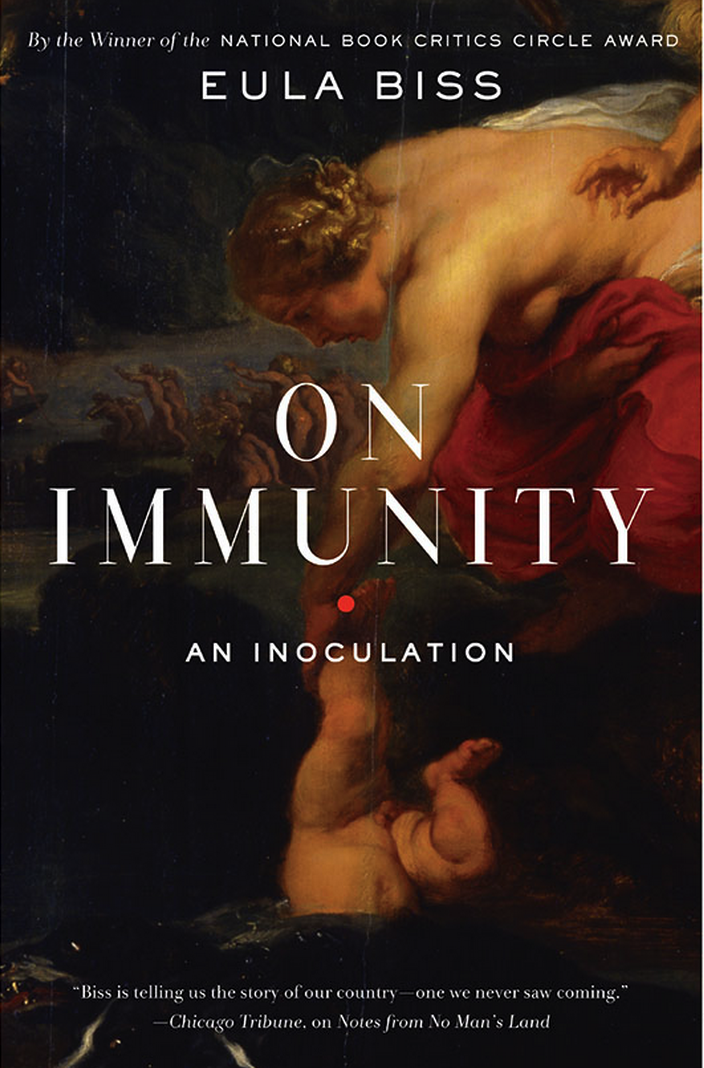
Eula Biss's On Immunity: An Inoculation is a remarkable book that I believe will fill an important niche in the defense of vaccines and has the potential of persuading those who doubt the benefit of vaccines to re-examine their conclusions. The book is a journey through the honest deliberations Ms. Biss herself undertook with the birth of her son. Rightly concerned with her newborn's safety and protecting him from harm (like the mother of Achilles--see the cover art), Ms. Biss's diligence to unpack arguments for and against vaccines is instructive as it shows how an active mind approaches complex issues and weighs the testimony and work of experts--an important trait that extends beyond vaccines.

 The comparative advantage and immense value of Ms. Biss's book is that it offers the reader a glimpse of how a non-medical individual approaches the issue of vaccination, what context of knowledge is activated, and how risk is assessed. In all of these realms, Ms. Biss excels and provides ample data (as well as expertly chosen anecdotes) to concretize the important points she makes throughout. 

Doing battle with those who would return us to the primitive with their opposition to vaccines--an unmitigated triumph of technology--will be a little easier with Ms. Biss at our side. I highly recommend her book.